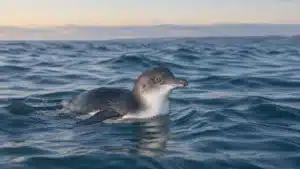
Seeing the St Kilda penguins
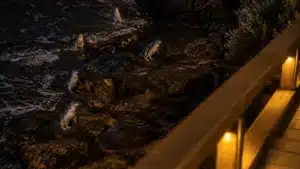
The colony can be watched from the elevated boardwalk at the end of St Kilda Pier during free, ticketed viewing sessions held every night. The sessions are run by Phillip Island Nature Parks, and booking ahead is essential — places are capped and they do go.
Two sessions a night
The first starts about 30 minutes after sunset, the second about an hour and a half after sunset. Each runs for roughly an hour, and each is capped at 150 people.
Free, but you need a ticket
There is no charge. Tickets are released every Tuesday from 10am AEST for the following week’s sessions, through Phillip Island Nature Parks. Turning up without one does not get you onto the boardwalk.
The boardwalk
A 150-metre elevated boardwalk opened in October 2025. It holds visitors at a safe distance from the burrows, uses wildlife-friendly lighting, and closes each night once the sessions finish.
Getting there
Trams 12, 16 and 96 all stop near the pier; you can also take a train to Balaclava and pick up tram 16, or the 606 bus. Parking near the Sea Baths is paid and limited, so public transport is easier at dusk.
Session times shift through the year with sunset, so check the time on your ticket rather than assuming last month’s. The penguins come ashore after dark year-round, but how many land, and how quickly, changes with the season and the weather.
The rules that keep the colony safe
These are not house style — little penguins are protected under Victoria’s Wildlife Act 1975, and interfering with the birds or their habitat is an offence.
- No flash, no bright lights, no phone torches. A camera flash at close range can disorient a bird that has just come out of the water in the dark.
- Don’t touch, feed or approach them. They are wild animals, not an exhibit. Watch from behind the railings and let them pick their own route home.
- Keep your voice down. Noise carries over the rocks and turns birds back at the waterline.
- Take your rubbish with you. Fishing line and plastic are among the most direct hazards on the breakwater.
- Dogs stay on a lead on the pier, and off the breakwater entirely. An off-lead dog is one of the few threats here that can kill several penguins in a single visit.
If you find a sick, injured or entangled penguin
Call the Zoos Victoria Marine Response Unit on 1300 245 678. Don’t try to catch or move the bird yourself, and don’t put it back in the water — a penguin ashore in daylight is often ashore for a reason.
How a colony ended up on a breakwater
The St Kilda breakwater was not built for penguins. It was constructed for the 1956 Melbourne Olympics, to shelter the yachting events, and the loose basalt boulders piled along it happened to produce exactly what a little penguin looks for in a nest site: deep, dry, shaded cavities with a short walk to the sea and no easy way in for a predator.
Penguins were first recorded nesting there in 1974. The colony now numbers around 1,400 birds — which makes it one of the few little penguin colonies anywhere in the world sitting inside a major city, a few kilometres from a CBD, rather than on a remote island.
What the colony is up against
An urban colony faces pressures a remote island one does not, and most of them are things visitors can influence:
- Dogs off lead on or near the rocks.
- Fishing line, hooks and plastic left on the breakwater, which entangle birds and their chicks.
- Artificial light along the foreshore, which disrupts birds trying to come ashore under cover of darkness.
- Boat and propeller strike in the shallow water around the pier.
- Heat — burrows in exposed rock can become dangerous during a Melbourne heatwave, and the birds cannot simply move somewhere cooler.