
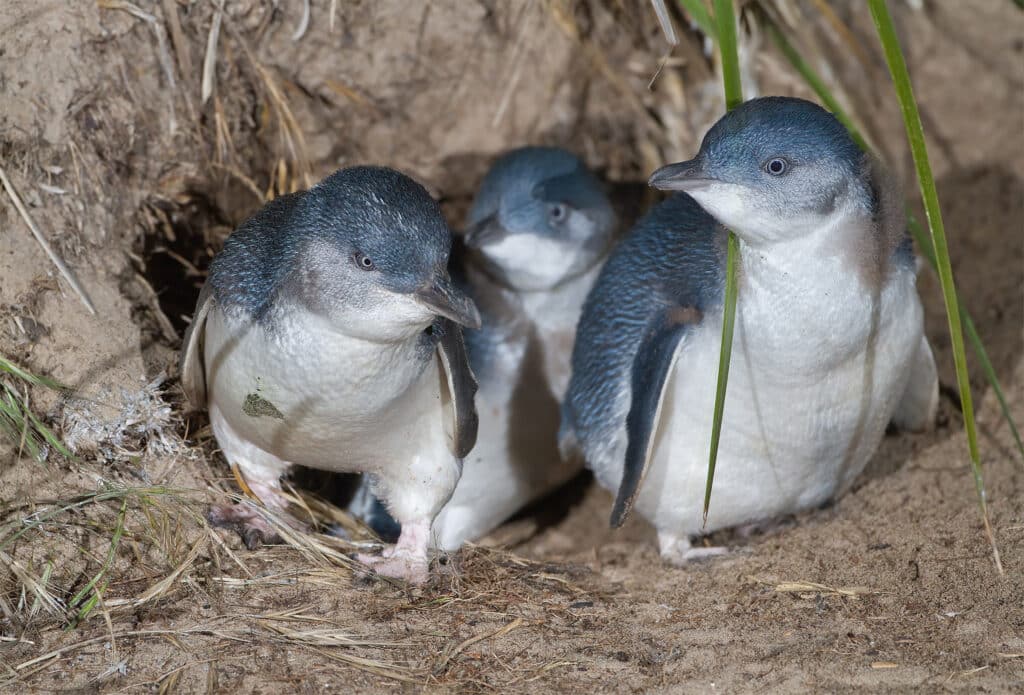
Walk the path behind the breakwater on a Tuesday morning and you’ll likely find a small group of volunteers bent over near the rocks, not looking at penguins at all. They’re pulling out fishing line snagged in the coastal grasses, bagging bottle caps and cigarette butts, and checking whether the last round of planting has taken hold. It’s unglamorous work. It’s also one of the more overlooked parts of protecting a colony that most people assume is only about the rocks themselves.
The St Kilda breakwater is a rubble-stone wall built in 1955 during upgrades to St Kilda Pier, and the little penguins that live in its cavities never asked to be there. The colony formed on its own, and it has stayed precisely because the wall offers something rare this close to a capital city: relative shelter from foxes and cats, a stretch of coast that hasn’t been fully paved over, and — increasingly, thanks to sustained volunteer effort — a foreshore that isn’t choking on rubbish. Foreshore revegetation and litter removal sit right alongside the more visible jobs like guided viewing and population counts, and honestly, they don’t get nearly enough credit.
What revegetation actually does for a penguin colony
It’s tempting to think of the plants along the foreshore as landscaping, something for people rather than for penguins. That’s not quite right. Native vegetation along the shoreline stabilises sand and soil, reduces erosion around the base of the breakwater, and helps maintain the kind of microclimate little penguins need when they’re moving between the water and their nest cavities after dark.
Little penguins aren’t burrowing animals in the way some seabirds are, but the vegetated fringe around a colony still matters. It buffers wind, offers some cover from predators and from disturbance, and supports the insect and small invertebrate life that keeps the wider foreshore ecosystem functioning. A bare, compacted, weed-choked verge does none of that. Indigenous coastal species — the tussock grasses, saltbush and other locally appropriate plantings you’ll see volunteers put in — also need far less intervention once established, which matters on a site that’s already stretched thin on resources.
There’s a knock-on benefit too. Healthier foreshore vegetation tends to hold the line against erosion driven by tidal action and storm surge, which is relevant given the whole colony sits on a human-built structure right next to a working harbour. Anything that reduces structural stress on that immediate environment is worth doing, even if the connection to penguin welfare isn’t obvious at first glance.
Litter isn’t just an eyesore, it’s an entanglement risk
This is the part that should worry anyone who cares about the colony. Marine plastic and discarded fishing line are among the most consistent, well-documented threats little penguins face anywhere along the southern Australian coast, and St Kilda is no exception. A bird returning from a day’s foraging can come ashore straight into a tangle of line left on the rocks or blown in from the beach. Flippers, necks and bills get caught. It doesn’t take much line to cause real damage, and because penguins return to the breakwater after dusk under cover of darkness, injuries from entanglement often go unnoticed until a routine check turns them up.
Litter removal, then, isn’t tidiness for its own sake. It’s a direct reduction in the number of hazards a penguin might encounter on the short, vulnerable walk between the waterline and its nest. Volunteers doing foreshore clean-ups aren’t just improving the view for people using the pier or grabbing a coffee nearby — they’re removing specific, physical risks from a colony’s home range.
Bottle caps, soft plastics and cigarette butts might seem lower-stakes than fishing line, but they degrade into smaller fragments that enter the food chain and the surrounding water. Given the colony forages daily in Port Phillip Bay, what ends up in the water off the pier isn’t separate from what a foraging penguin might encounter or ingest indirectly through the fish it eats.
The foreshore is part of the colony’s range, not just its backdrop
It’s easy to think of “the colony” as the rocks and nothing else. In practice, the birds’ world extends along the adjacent foreshore, the base of the pier, and the waters immediately offshore. Little penguins forage at sea all day and come ashore after dark, which means the strip of land between the water and the breakwater cavities is functionally part of their nightly commute. If that strip is degraded, littered or overrun with weeds that offer no shelter, the birds are worse off even if not a single rock on the wall has changed.
This is also where off-leash dogs cause the most damage, incidentally — not on the breakwater itself, where access is already restricted, but on the surrounding foreshore paths where a dog can be off its lead for thirty seconds and do a lot of harm in that time. Revegetated areas with clearer signage and defined paths help volunteers manage this, because a foreshore with obvious, established plantings reads differently to visitors than an empty sandy verge that looks like it’s fair game for a dog to run through.
I’ll say this plainly: council-level foreshore management doesn’t get anywhere near the public attention that a penguin sighting does, but in my view it’s arguably more important to the colony’s long-term survival than any single evening of guided viewing. You can run a hundred beautifully managed dusk viewings a year and still lose ground if the surrounding habitat keeps degrading in the daylight hours when nobody’s watching.
Who does this work and how it fits with the rest of the conservation effort
Foreshore care around the breakwater is carried out by trained volunteers and researchers working alongside council land management, in the same spirit as the population counts, weighing and banding that have continued since Professor Mike Cullen of Monash University began his long-term study of the colony in 1986. Cullen ran fortnightly night trips for over a decade, assisted by Neil Blake of St Kilda Council, and that early monitoring work set the pattern that volunteers still follow today: consistent, unglamorous, long-term attention rather than one-off intervention.
Revegetation and litter removal fit the same mould. Nobody plants a stand of coastal saltbush and sees results the following week. It takes seasons, sometimes years, for plantings to establish enough to genuinely change how a stretch of foreshore functions for wildlife. The commitment required is closer to the fortnightly monitoring model than to a single busy weekend working bee, even though working bees are often how new volunteers get their start.
If you want to see how this connects to the day-to-day protection work around the colony, our piece on how citizen scientists help protect the St Kilda penguin colony goes into the population counts and banding work in more detail, and How Can I Help? has practical starting points if foreshore work is something you’d want to get involved in directly.
What you can do without picking up a trowel
Not everyone has a Tuesday morning free for weeding, and that’s fine. Foreshore protection benefits from small, low-effort choices as much as from organised volunteer sessions. Taking your own rubbish and fishing line home rather than leaving it on the rocks is the most obvious one. Keeping dogs leashed on foreshore paths near the breakwater, even when it looks quiet, matters more than people assume, and it’s something we cover in more depth when discussing how to visit the St Kilda penguins with kids respectfully.
Sticking to formed paths instead of cutting through vegetated areas helps too. New plantings are fragile in their first year or two, and a shortcut trampled through a revegetated patch can undo months of establishment work in a single afternoon. If you’re planning an evening visit, our guide to how volunteer-guided viewing works at the St Kilda breakwater explains where you can stand and watch without adding pressure to the areas volunteers are actively trying to restore.
None of this is about locking the foreshore away from people. The pier and the surrounding coast are genuinely well used, and that’s part of what makes this colony’s situation unusual, a wild breeding colony persisting about seven kilometres from Melbourne’s CBD, cheek by jowl with foot traffic, dog walkers and fishers. The goal of revegetation and litter work isn’t exclusion. It’s making sure the shared space stays functional for wildlife that has no other option nearby, given how few urban mainland colonies exist in Victoria in the first place.
A slow, ongoing job rather than a finished project
According to Zoos Victoria’s work on little penguin conservation, habitat degradation and marine debris remain persistent, well-documented pressures on little penguin colonies along the Victorian coast generally, not just at St Kilda. The Victorian Government’s environment agency DEECA has also flagged coastal foreshore condition as a factor in urban wildlife resilience more broadly. None of that is unique to this colony, but it does mean the foreshore work happening here isn’t a local quirk. It’s the same category of intervention being applied at a small, specific site that happens to sit inside a major city.
There’s no point pretending this work will ever be “done”. Weeds come back. Litter blows in from the beach and from boats on the bay regardless of how many clean-ups happen. Plantings need replacing after storms or heat events. It’s ongoing maintenance, closer in spirit to mowing a lawn than to building a fence. But that’s precisely why it needs consistent attention rather than occasional bursts of enthusiasm, and why the volunteers doing it tend to be the same people who show up for the dusk viewing shifts and the banding sessions. It’s one continuous effort, not a series of separate projects, even if the litter picker and the spotting scope look like very different jobs from the outside.