
Walk the breakwater at dusk often enough and eventually someone on the rocks will point at a ripple that isn’t a penguin. It’s low in the water, moving with a fast, purposeful wake, and it’s gone under before you can get a proper look. That’s usually a rakali, Australia’s native water rat, and it’s been sharing this rock wall with the little penguin colony for as long as anyone’s been watching either species properly. Volunteers who run the fortnightly counts here aren’t just tallying penguins. They’re logging rakali sightings too, and that second dataset does more work than most visitors realise.
I’ll be honest, the first time a volunteer explained the rakali monitoring to me I assumed it was a side project, something logged out of general curiosity rather than anything that mattered to the penguins. That’s not quite right, and it took a few more visits standing on the St Kilda breakwater in the cold to understand why the two get tracked together.
What rakali actually are, and why they’re not a threat
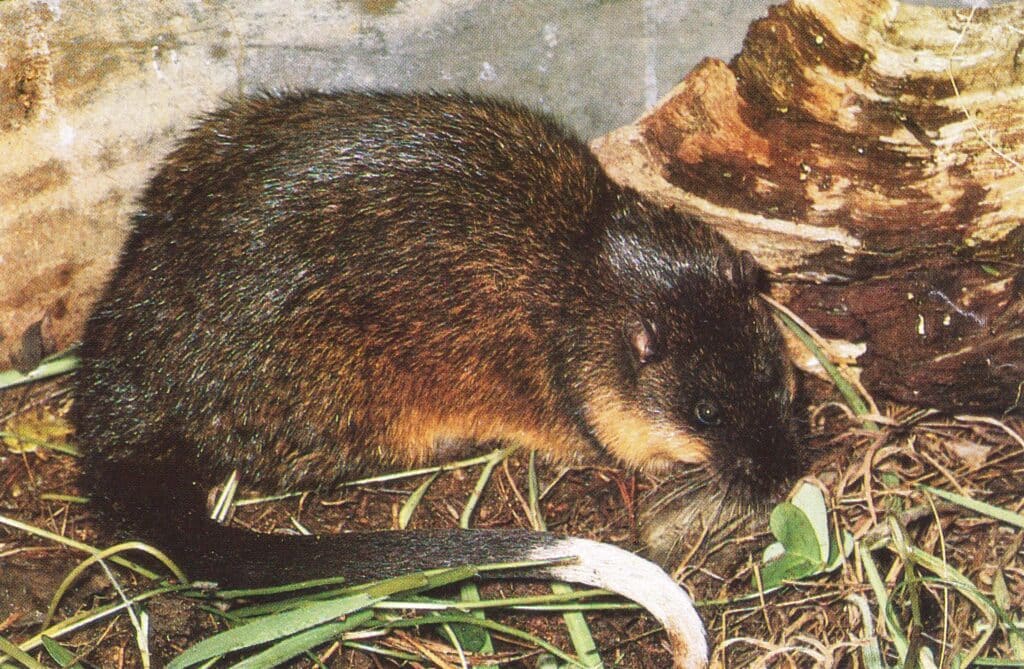
Rakali (Hydromys chrysogaster) are Australia’s largest native rodent, a genuinely handsome animal with a white-tipped tail, webbed hind feet and a coat that sheds water like an otter’s. They’re sometimes called the “Australian otter” in older tourist material, which annoys people who study them properly, but it gives you the right mental picture. They’re carnivorous, eating yabbies, fish, mussels and the occasional bird egg or scavenged carcass, and they’re just as at home in the polluted lower reaches of a city river as they are in pristine wetland.
They are not a predator of adult little penguins, and there’s no established evidence of rakali taking penguin chicks at this colony. That’s an important distinction, because a lot of visitors hear “native rat living in the same rock wall as the penguins” and assume conflict. The real relationship is closer to coexistence, two species using the same cavities and gaps in the same 1955-built rubble wall for their own separate reasons.
Why researchers count them alongside the penguins
The honest answer is that a rock wall like the St Kilda breakwater is a small, closed system, and you learn more about it by tracking everything living in it than by watching one species in isolation. Rakali numbers, breeding activity and body condition can flag changes in water quality, prey availability and human disturbance in Port Phillip Bay well before those pressures show up clearly in the penguin data. Little penguins forage far out in the bay and beyond, so their foraging success is affected by conditions well offshore. Rakali, by contrast, feed much closer to the wall and along the adjacent shoreline, so their condition reflects what’s happening right at the colony’s doorstep.
Put simply: rakali are a nearer-shore indicator species, penguins are a further-out one, and a volunteer team logging both gets a fuller picture of the health of that stretch of harbour than either dataset gives alone.
Shared risks, not shared blame
The threats that make life harder for the penguins mostly make life harder for the rakali too. Marine plastic and discarded fishing line don’t discriminate by species, and a rakali can become just as entangled as a penguin can. Boat strike and prop injury are documented risks for rakali in busy harbours generally, given how much time they spend at the surface. Artificial light along the foreshore affects nocturnal behaviour broadly, not just penguin return-to-shore timing, though the specific mechanism differs between species. And both animals are using a rock wall that was never designed as habitat for anyone. It was built as harbour infrastructure in 1955, as part of the St Kilda Pier upgrade, and both species essentially moved into gaps left over by rubble-stone construction.
That shared vulnerability is part of the reason volunteers don’t treat rakali monitoring as an unrelated hobby project running next to the “real” penguin work. The rock wall is the shared asset, the harbour is the shared risk, and the population trends of both animals are, in effect, cross-checks on each other.
How the counts actually happen
If you’ve done a guided night visit here you’ll already have some sense of the rhythm: volunteers arrive before dusk, penguins return from a day’s foraging under cover of darkness, and the group works quietly with red-filtered torches to avoid disrupting the birds coming ashore. Rakali sightings get folded into that same evening, since the animals are active at dusk and through the night and use the same stretch of rocks. There’s no separate expedition for it. It’s opportunistic, consistent, logged the same way each time, and it builds into a long-run dataset the same way the penguin population counts, weighing and banding records have built up over decades of volunteer effort here.
This is the same kind of patient, unglamorous groundwork that Professor Mike Cullen started when he began his long-term study of the colony in 1986, running fortnightly night trips with assistance from Neil Blake of St Kilda Council, work that volunteers have kept going in the years since Cullen’s death in 2001. Nobody was chasing a headline back then either. It was just showing up, fortnight after fortnight, and writing down what was actually there.
What this tells us about the health of the bay
Museums Victoria and other research bodies have used rakali as a bioindicator species in urban waterways more broadly, precisely because they sit near the top of a compact food chain and respond to pollution, prey depletion and habitat loss relatively quickly compared to longer-lived, wider-ranging animals. A healthy, stable rakali presence along the breakwater is a reasonable proxy for a healthy nearshore environment, the same water the penguins are swimming through on their way out to forage and back again after dark.
None of this is about elevating rakali above the penguins in importance, and I don’t think any volunteer here would frame it that way. It’s about reading the whole rock wall as one system rather than pretending the penguins exist in isolation from everything else using it. If rakali numbers dropped off sharply, or condition scores declined, that would be worth taking seriously as an early signal about the broader harbour environment, well before you’d expect to see anything as slow-moving as a shift in penguin breeding success.
Where the two datasets diverge, and why that’s fine
It would be tidy to say rakali and penguin numbers move in lockstep, but they don’t, and researchers don’t expect them to. Rakali are territorial, solitary outside breeding, and their local population is shaped heavily by things happening right along the shoreline: stormwater outflows, foreshore litter, local prey density. Penguins are colonial, monogamous season to season, reusing the same nest cavity for years, and their numbers are shaped as much by conditions far out in the bay and beyond as by anything happening on the rock wall itself. Roughly 18 to 50 percent of young penguins that don’t pair successfully the first time will find a new mate the following season, which is a very different kind of population dynamic to a solitary, territorial rodent.
So when the two datasets tell slightly different stories in a given season, that’s not a contradiction to be resolved. It’s actually useful information, because it helps volunteers work out whether a change in penguin numbers is likely driven by something happening at the colony itself, or by something happening much further out at sea where the rakali data simply can’t tell you anything either way.
What visitors can actually do with this
If you’re heading down for a guided viewing, you don’t need to go looking for rakali specifically, and volunteers won’t be running a dedicated rakali tour. But if you do see that low, fast ripple in the water near the rocks, it’s worth mentioning to whoever’s guiding your group. Sightings, however casual, still get noted, and that’s genuinely part of how this long-run picture of the breakwater gets built.
The bigger practical point, honestly, is that everything that protects the penguins protects the rakali too. Keeping dogs on leash, taking fishing line home rather than leaving it on the rocks, avoiding torches and flash photography, all of it protects a shared, fairly fragile stretch of urban shoreline that two very different Australian species have independently decided is worth living on. If you want the fuller rundown on how to behave down there, our guide on what to wear and bring for a night visit covers the practical side, and the piece on why flash photography and torches genuinely harm the penguins explains the light issue in more depth. For the reasoning behind why the whole rock wall matters, not just the penguin cavities in it, our page on foreshore revegetation and litter removal is worth a read, and if you want to know how any of this monitoring actually gets done on the ground, how citizen scientists help protect the colony lays out the volunteer structure behind it.
I’d argue this is one of the more underrated parts of the work happening on that wall. It doesn’t get the same attention as a chick hatching or a moulting adult sitting fluffed up and grumpy on the rocks, but it’s the kind of unglamorous, structural monitoring that tells you whether the whole system is actually holding up. For background on the wall itself and how an unplanned colony ended up living in 1955 harbour infrastructure, see our page on the St Kilda Breakwater, and for the fuller research history behind all of this counting, our conservation and research strategy page has the detail.
Next time you’re down there after dark and something low and quick slips off the rocks into black water before you can get a proper look, that’s not a rat problem. That’s a data point.