
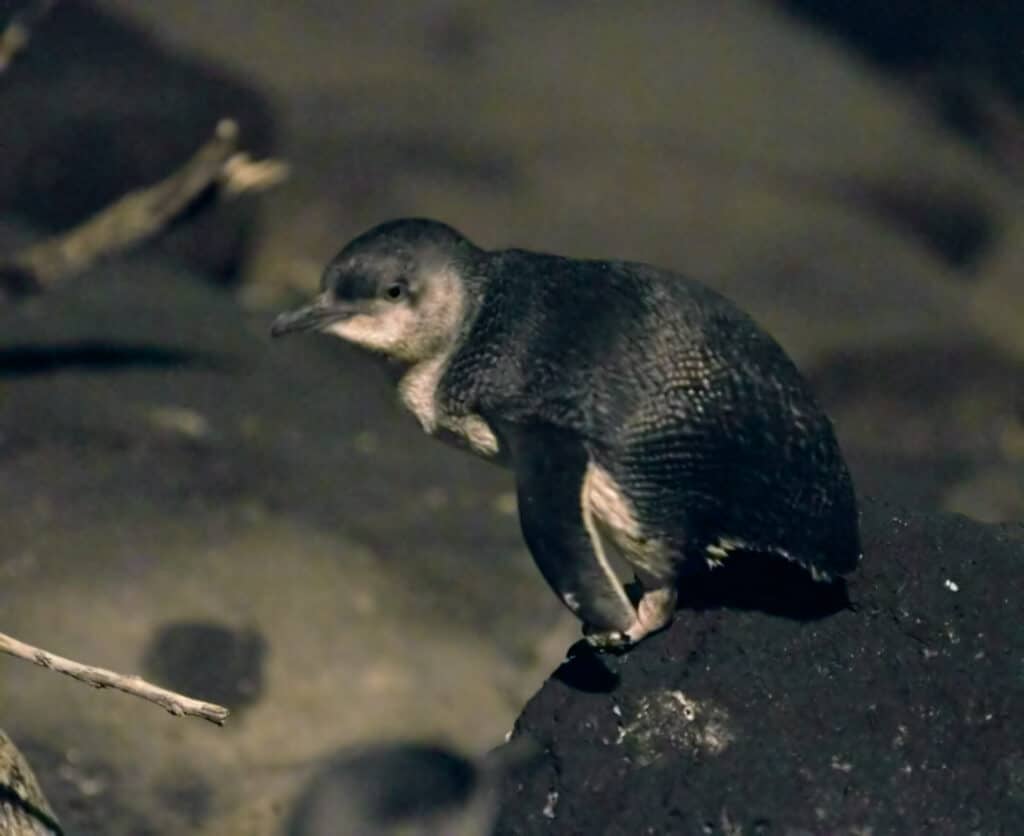
Look out from the elevated viewing boardwalk at the end of St Kilda Pier on a winter’s evening and, on some nights, you’ll spot them along the rock wall: a few people working slowly with red light and quiet voices, watching the water rather than their phones. They’re not tourists. They’re volunteers, and most of them started exactly where you might be starting now — as someone who liked the penguins and wanted to do more than just look.
The St Kilda breakwater colony is an unusual case in Australian conservation. It’s a rubble-stone sea wall built in 1955 as part of the St Kilda Pier upgrade, and the little penguins that live inside its cavities were never planned for. They just moved in. Decades on, this is still the only mainland little penguin breeding colony in Victoria sitting inside a major city, about 7km from the CBD. That proximity is exactly why citizen involvement matters here in a way it might not at a more remote colony — there are simply more people close enough to help, and more people close enough to cause harm.
Why citizen science matters for a colony like this
Professor Mike Cullen from Monash University began the long-term study of this colony back in 1986, after a harbour redevelopment proposal raised concerns about what might happen to the birds. He ran fortnightly night trips out to the breakwater until his death in 2001, with Neil Blake from St Kilda Council assisting him for much of that period. What’s easy to miss in that history is that it was never a solo academic effort — it relied on people showing up, night after night, to count and record what they saw. Volunteer monitoring has continued in the decades since, and it’s built one of the more detailed long-running pictures of an urban little penguin population anywhere in the country.
That kind of dataset doesn’t come from a handful of researchers dropping in occasionally. It comes from consistency — the same rock crevices checked on the same rough schedule, season after season, so that changes actually mean something when they show up. It’s easy to read the old J.M. Cullen report without appreciating how much of that consistency depended on ordinary volunteers rather than paid staff. It still does.
What trained volunteers actually do out there
The most visible layer is the guided public viewing at dusk, timed for when penguins return from a full day foraging at sea under cover of darkness. Those nightly sessions are run by Phillip Island Nature Parks, with guides on duty on the boardwalk. But that’s really the public-facing side of a much bigger job. Volunteers also carry out population counts, weigh birds, and band them for long-term identification — the unglamorous, headlamp-and-clipboard work that actually produces usable data.
Just as important is the protective side of the work. Guides are there during sessions to ask people not to use flash photography or shine torches towards the rocks, and to remind visitors that the breakwater itself is off limits — it’s unstable underfoot and walking on it disturbs birds sheltering in the cavities below, which is why the public watches from behind the boardwalk railings instead. Dogs are allowed on the pier on a lead, but never on the breakwater. None of this is glamorous. Most of it is standing around in the cold explaining, politely but firmly, why a phone torch is a problem. If you’ve read our piece on why flash photography and torches genuinely harm St Kilda’s penguins, you’ll already understand the logic — a burst of light at the wrong moment can be enough to make a penguin abandon its approach to shore and swim back out, burning energy it can’t easily spare.
The specific skills that get used most
You don’t need a science degree to get involved, and we’d gently push back on anyone who assumes otherwise. What’s actually needed most often is patience, decent night vision, and the willingness to have the same conversation with a stranger about their dog for the fortieth time without getting shirty about it.
That said, the technical roles matter too. Banding and weighing require training and are done under supervision, because handling a wild animal badly causes more harm than good. Population counts require an eye for the difference between an occupied burrow and an empty one, and enough discipline to record what you actually saw rather than what you expected to see. Little penguins are mostly monogamous within a season and tend to reuse the same nest cavity year on year, though something like 18 to 50% of young birds end up re-pairing after a first match doesn’t work out — details like that only get documented because someone was watching closely enough, over long enough, to notice the pattern.
Understanding the breeding calendar before you volunteer
It helps to know the colony’s rhythm before you turn up wanting to help, because the work looks different depending on the month. Courtship and nest re-forming run from late July through October. Eggs are laid from August into early November, usually a clutch of two, incubated for around five weeks by both parents in turn. Chicks hatch from September through December and are fed whole fish by both adults. Then, over summer, adults go through a moult that takes about two weeks, during which they can’t go to sea at all and live off stored fat reserves.
That last point trips a lot of new volunteers up. A moulting penguin looks scruffy and sometimes distressed, standing around on land for days at a stretch, and the instinct is to think something’s wrong. It isn’t — it’s a normal, if slightly alarming-looking, part of the annual cycle. Our seasonal calendar page goes through this in more depth, and it’s worth reading before your first shift rather than after.
The threats volunteers are actually working against
None of this monitoring happens in a vacuum. The breakwater sits right next to a working harbour, and the threats to the colony are the ordinary, well-documented ones rather than anything dramatic: off-leash dogs, marine plastic and fishing-line entanglement, boat strike, and artificial light disrupting the birds’ night return to shore. Add in the mainland predation risk from foxes and cats, and the general wear of being a wild colony squeezed onto a small human-built structure, and you start to see why consistent, informed human presence at dusk isn’t just nice to have. If you ever see a bird tangled in line, our entanglement guide explains who to call rather than what to attempt yourself.
We’d argue the light pollution issue gets underrated compared to dogs. Dogs are dramatic and visible, so they get talked about more. But a promenade lit up brighter each year, plus the ambient glow off the city, is a slower and less obvious problem for birds that rely on darkness to feel safe coming ashore. The viewing boardwalk itself uses wildlife-friendly lighting, but the wider problem isn’t something a single evening of volunteering fixes — it’s a planning and lighting question as much as a wildlife one.
How to actually get started
The most straightforward entry point is booking one of the free evening viewing sessions and asking the guides on duty how people get involved — they hear the question often and are generally glad to answer it properly rather than in passing. The sessions are ticketed and capped, and bookings are essential, so it pays to sort that out before you head down; our penguin viewing page and our page on how guided viewing works at the St Kilda breakwater are both good primers, and the how can I help page lays out the practical next steps and contact points.
If you can’t commit to regular shifts, there’s still real value in supporting the work financially through the site’s donation page, or simply in being the kind of visitor who models good behaviour for everyone else nearby — keeping your dog on a lead and off the breakwater, keeping your phone in your pocket, watching quietly from behind the railings. If you’re bringing children, our guide on visiting the St Kilda penguins with kids without disturbing them is worth a read beforehand, since a lot of well-meaning families unknowingly do the wrong thing simply because nobody told them otherwise.
What the data actually gets used for
It’s worth being honest that citizen science only matters if the data goes somewhere. The counts, weights and banding records feed into the colony’s ongoing conservation and research approach, informing decisions about lighting, fencing, signage and where volunteer effort is most needed. You can read more about that broader approach on our conservation and research strategy page. It’s not glamorous reading, but it’s the difference between volunteering that feels good and volunteering that actually changes outcomes for the birds.
For a broader, evidence-based view of little penguin biology and conservation beyond this one colony, Zoos Victoria’s research work is a solid starting point, as is BirdLife Australia’s published material on seabird and coastal bird monitoring. Both are useful if you want context for why the fortnightly grind of counting burrows matters as much as it does.
The birds don’t know any of this, of course. They just keep coming back after dusk, the same cavities, mostly the same partners, doing what little penguins have done on this stretch of coast for longer than the breakwater itself has existed in its current form. The volunteers are just trying to make sure that keeps being possible.