
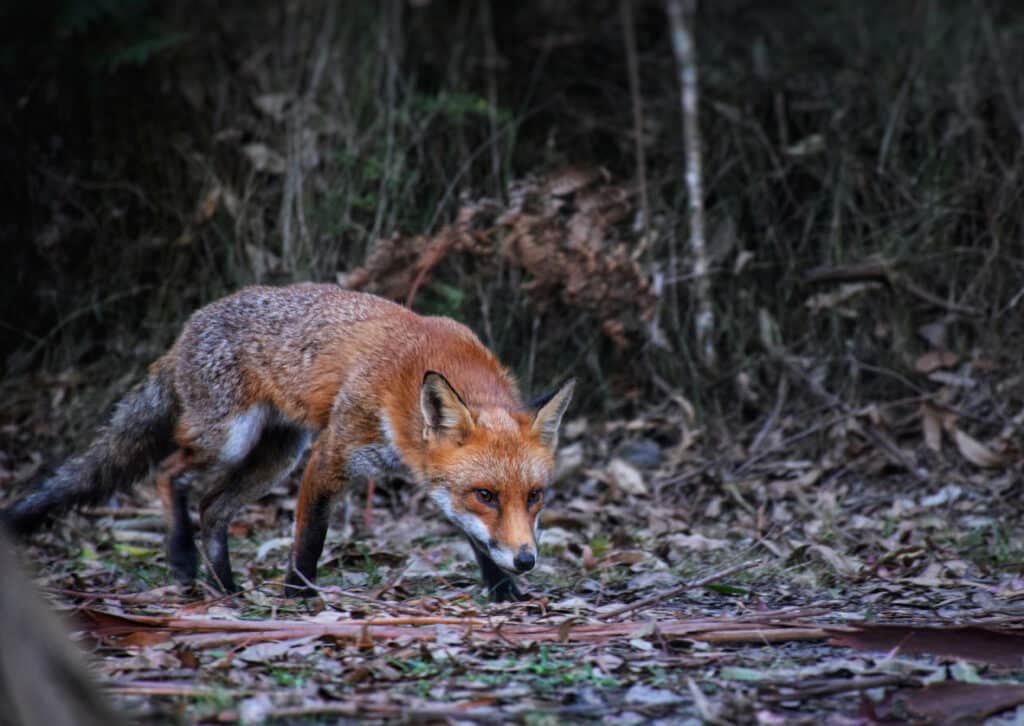
Watch the colony from the pier boardwalk at dusk in winter and it’s easy to think of it as tucked away from the mainland’s usual predators, ringed by water on three sides, surely safe from the animals that hammer penguin colonies elsewhere in Australia. It isn’t quite that simple. The rubble wall runs straight off the shore at St Kilda, and where there’s a land connection, there’s a walking path for a fox. Volunteers have mentioned fox sign on the foreshore near the breakwater over the years, and it’s exactly the kind of low-grade, easy-to-miss risk that doesn’t make headlines but never really goes away either.
This is the thing about mainland predation risk for a colony like this one: it’s not dramatic, it’s chronic. There’s no single incident to point to, just a standing possibility that sits alongside dogs, boat traffic and plastic as one of the reasons this colony needs active protection rather than benign neglect.
Why an inner-city colony isn’t automatically safe from predators
It’s tempting to assume that a colony 7km from Melbourne’s CBD, wedged into a 1955 rock wall built for the St Kilda Pier upgrade, is somehow insulated from fox and cat pressure by sheer proximity to a busy urban strip. In fact urban and semi-urban foxes are well documented across greater Melbourne, and they don’t need wilderness to move through. A fox will happily follow a foreshore reserve, a bike path, or a quiet stretch of parkland at 2am when nobody’s around. The breakwater’s shore-end connects to exactly that kind of foot traffic corridor, and little penguins returning after dark, or eggs and chicks sitting in shallow rock cavities, are an easy meal if a predator gets access.
Domestic and semi-feral cats present a related but distinct problem. Unlike foxes, which might make an occasional opportunistic raid, cats operate at much higher density in inner suburbs and can pick off fledglings or injured adults with far less effort. Zoos Victoria’s work on little penguin conservation, including the well-known guardian dog programme at the Warrnambool colony, exists specifically because fox and dog predation has caused serious, measurable colony collapses at unprotected mainland sites. St Kilda hasn’t experienced anything on that scale, and we’re not suggesting it has, but the underlying vulnerability, a ground-nesting seabird colony sitting metres from an urban foreshore, is the same vulnerability those other colonies had before things got bad.
What makes the breakwater different from a totally exposed colony
To be fair to the site, the breakwater’s rubble-stone construction does help. The cavities between the rocks are narrow and irregular, offering nesting penguins a kind of built-in defence that an open sandy burrow wouldn’t. A fox can smell a penguin in a rock crevice a lot more easily than it can dig one out. That’s a genuine point in the colony’s favour, and it’s part of why this site has persisted for as long as it has despite sitting inside a major working harbour.
But “harder to access” isn’t “inaccessible.” Penguins still have to come and go, walking across exposed rock and sometimes open ground near the shore end of the wall to reach their nest cavities after foraging. That’s the vulnerable window, and it’s one reason volunteers pay close attention to the shoreward approach, not just the wall itself, during evening monitoring.
The cat problem is mostly a management problem, not a wildlife problem
We’ll say this plainly, because it’s the one place where local debate sometimes goes soft: pet cats allowed to roam at night near a foreshore reserve are a policy failure, not a natural process. A fox is a wild animal doing what foxes do. A pet cat wandering the reserve after dark at St Kilda is doing what its owner has allowed it to do. The City of Port Phillip has cat curfew and containment provisions in its local laws, and honestly, if you live within a few streets of the foreshore anywhere near the colony, keeping cats indoors overnight isn’t an inconvenience, it’s the difference between a healthy colony and a slow one-bird-at-a-time attrition that nobody notices until numbers are down.
Feral and semi-feral cat populations are harder to manage and fall more into pest-control territory than pet ownership, but the same basic principle applies: any cat with unsupervised night access to the foreshore is a live threat to a colony that nests at ground level in the dark.
Why night-time behaviour matters for predation risk specifically
Little penguins forage at sea all day and only return to the breakwater after dusk, under cover of darkness, which is exactly when foxes and cats are most active too. It’s an unfortunate overlap. The same low light that makes the birds feel safe enough to cross open rock is the same low light predators use to hunt. This is also why artificial light disrupting penguins coming home at dusk compounds the predation issue rather than sitting separate from it: a disoriented, light-dazzled penguin delayed on open rock is a much easier target than one that ducks straight into its cavity.
It’s part of why the breakwater gets so noisy after dark too, that chorus of calling is partly pair-bonding and partly the general chaos of a colony trying to get its members home safely and quickly.
What volunteers actually do about it
There’s no fox-proof fence around a rock wall in the middle of a working harbour, so the practical response leans on vigilance rather than infrastructure. Volunteers monitoring the colony keep an eye out for predator sign during their shifts, while guides at the nightly viewing sessions run by Phillip Island Nature Parks handle the more visible jobs, discouraging flash photography and torches and keeping people behind the boardwalk railings. Parks Victoria, which manages the pier and breakwater, keeps dogs off the rock wall entirely. Population counts, weighing and banding all feed into a longer-term picture of colony health, and a sudden drop in chick survival in a given season is one of the signals researchers watch for as a possible flag of increased predation pressure, alongside more common causes like poor foraging conditions or storm losses.
This kind of monitoring has a long history here. Professor Mike Cullen of Monash University started the colony’s long-term study back in 1986, off the back of a harbour redevelopment proposal, running fortnightly night trips with help from Neil Blake of St Kilda Council until Cullen’s death in 2001. Volunteer monitoring has carried on since, and predation risk, alongside dogs, light and marine debris, has stayed part of what gets tracked.
What visitors can actually do about a problem that isn’t theirs
Most people reading this aren’t going to encounter a fox at the breakwater. But there are a few concrete things that help, and they’re mostly about not adding to the pressure. Viewing now happens from the 150-metre elevated boardwalk at the end of the pier during free but ticketed one-hour sessions, so book ahead, stay behind the railings rather than trying for a closer photo, and leave the rocks to the birds. If you live locally, treat cat containment overnight as seriously as bin night. Dogs are allowed on St Kilda Pier on a lead but are not permitted on the breakwater at any time; a loose dog isn’t a fox, but it adds to exactly the same category of ground-level disturbance the colony has to absorb every single night regardless of who caused it.
If you want to actually contribute rather than just avoid making things worse, getting involved as a citizen scientist is the more direct route, and volunteer monitoring at the breakwater is where a lot of this predator-watching actually happens in practice. It’s not glamorous work, mostly a lot of quiet standing around at dusk, but it’s the reason the colony has survived seventy years on a structure nobody built for it.
A small, unfashionable colony that keeps hanging on
There’s something almost stubborn about this colony’s continued existence. It was never planned, it formed inside a rock wall built for entirely unrelated reasons, and it’s persisted through decades of boat traffic, foreshore development and a harbour that never stopped being busy around it. Fox and cat predation risk is real, and it’s not going away just because the colony sits inside a city rather than out on some quiet island. But the same rock cavities that make this such an odd, accidental home also give the birds a genuine edge that fully exposed mainland colonies don’t have.
For more on the specific threats layered on top of this one, our page on foreshore revegetation and litter removal covers the habitat side of the equation, and DEECA’s Port Phillip Bay environment resources are worth a look if you want the broader picture of pressures facing foreshore wildlife across the bay.